GRP Cladding & Components
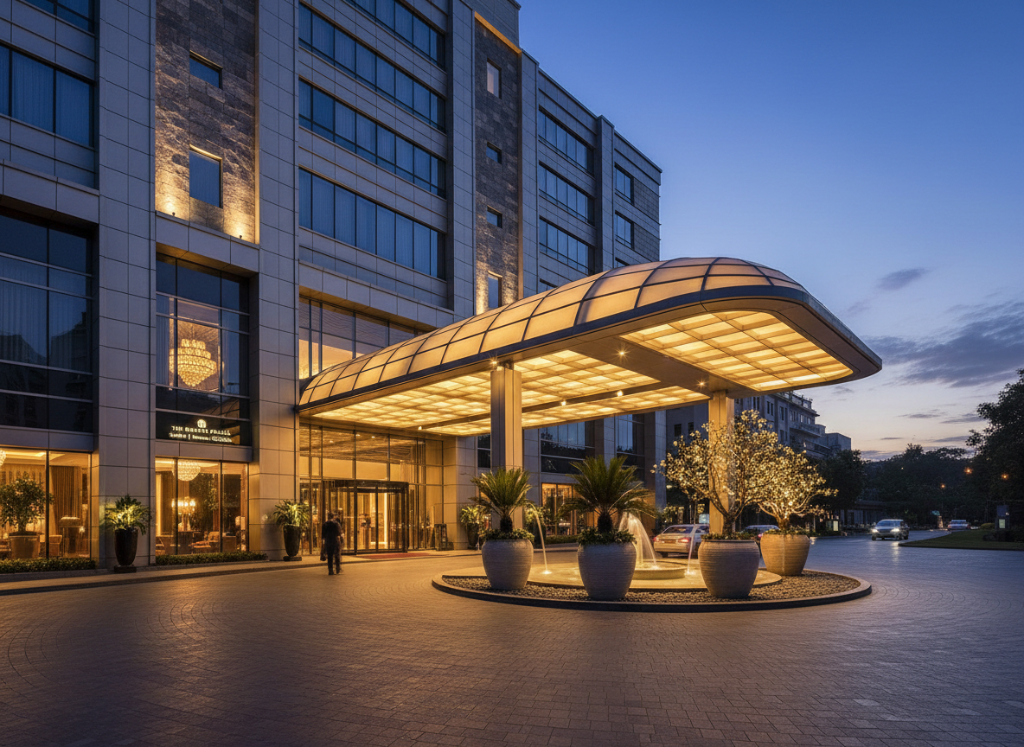
Glass Reinforced Plastic (GRP) domes, claddings, pergolas, and custom components for projects that need complex shapes, low weight, and corrosion resistance. Sana Al Jazira combines GRP with metal, glass, wood, and fit-out works to deliver complete architectural packages—not just loose parts.
Why GRP Works
Plain precast and metal have limits when you need highly curved, lightweight, or corrosion-resistant pieces. On roofs, canopies, and feature zones, heavy concrete and stone overload the structure; exposed metal can corrode or show joints; GRC sometimes becomes overkill for small, intricate items.
Glass Reinforced Plastic (GRP) is a fibre-reinforced polymer that combines a resin matrix with glass fibres. That gives you:
- Very low weight compared with concrete or stone.
- High malleability for double curves, deep textures, and sculptural shapes.
- Corrosion resistance in coastal, humid, or chemically aggressive environments.
- A wide range of colors, textures, and finishes—from stone-like to glossy, metallic, or RAL-matched. 
For an outfit like Sana Al Jazira that already handles GFRC, GFRG, wood, metal, and fit-outs, GRP is one more tool in the kit—used where plastics make more sense than cement-based systems.
When GRP Is the Right Choice
When the structure can’t carry heavy cladding or domes, and you need very lightweight feature elements.
When components sit in humid, coastal, pool, or chemically aggressive environments where corrosion is a concern.
When the design calls for complex free-form shapes or strong, consistent colors that are difficult or expensive in concrete, stone, or metal.
What It Covers & Key Applications
What It Covers
Sana Al Jazira’s GRP scope includes:
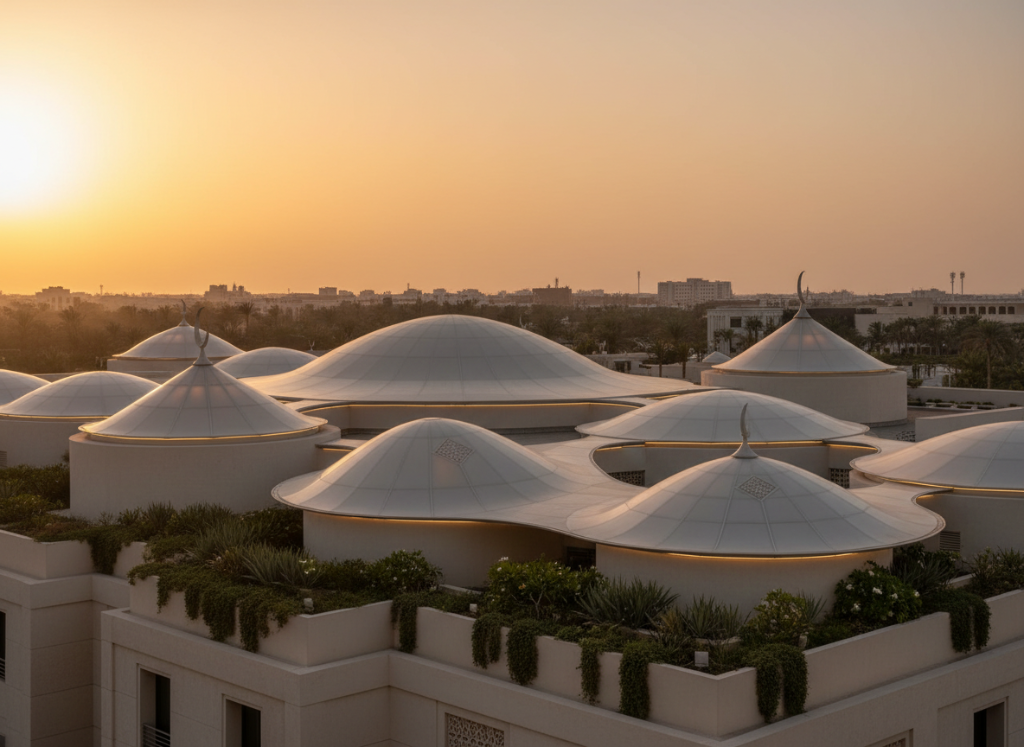
- GRP domes and roof features.
- GRP columns, claddings, and decorative vertical elements.
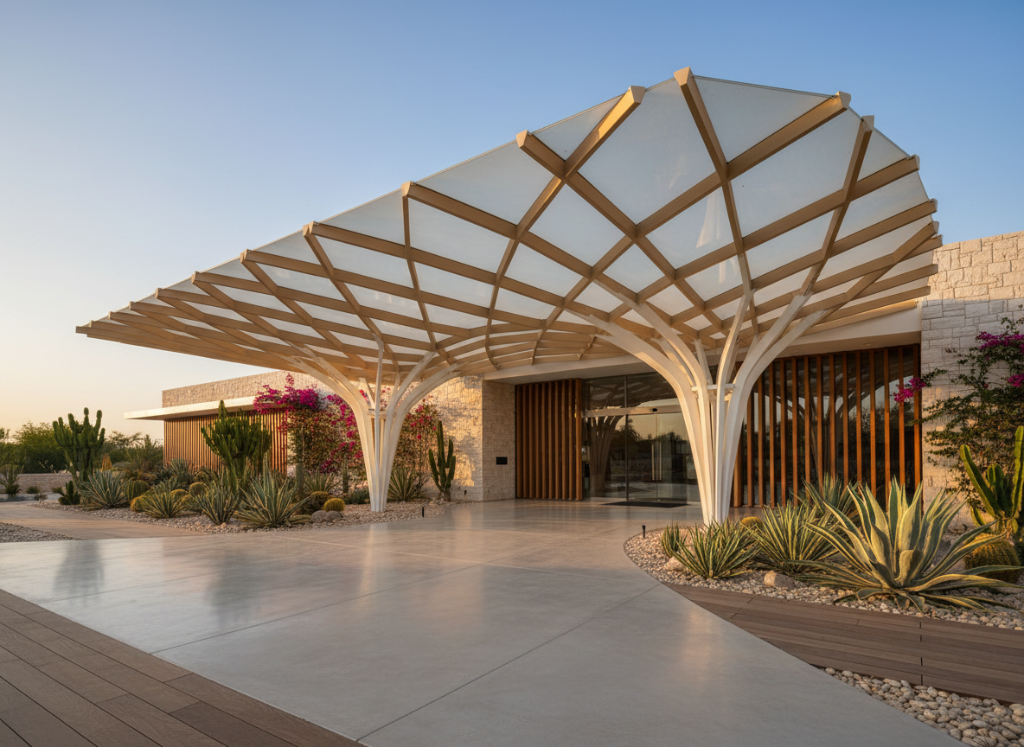
- GRP pergolas, canopies, and shading structures.
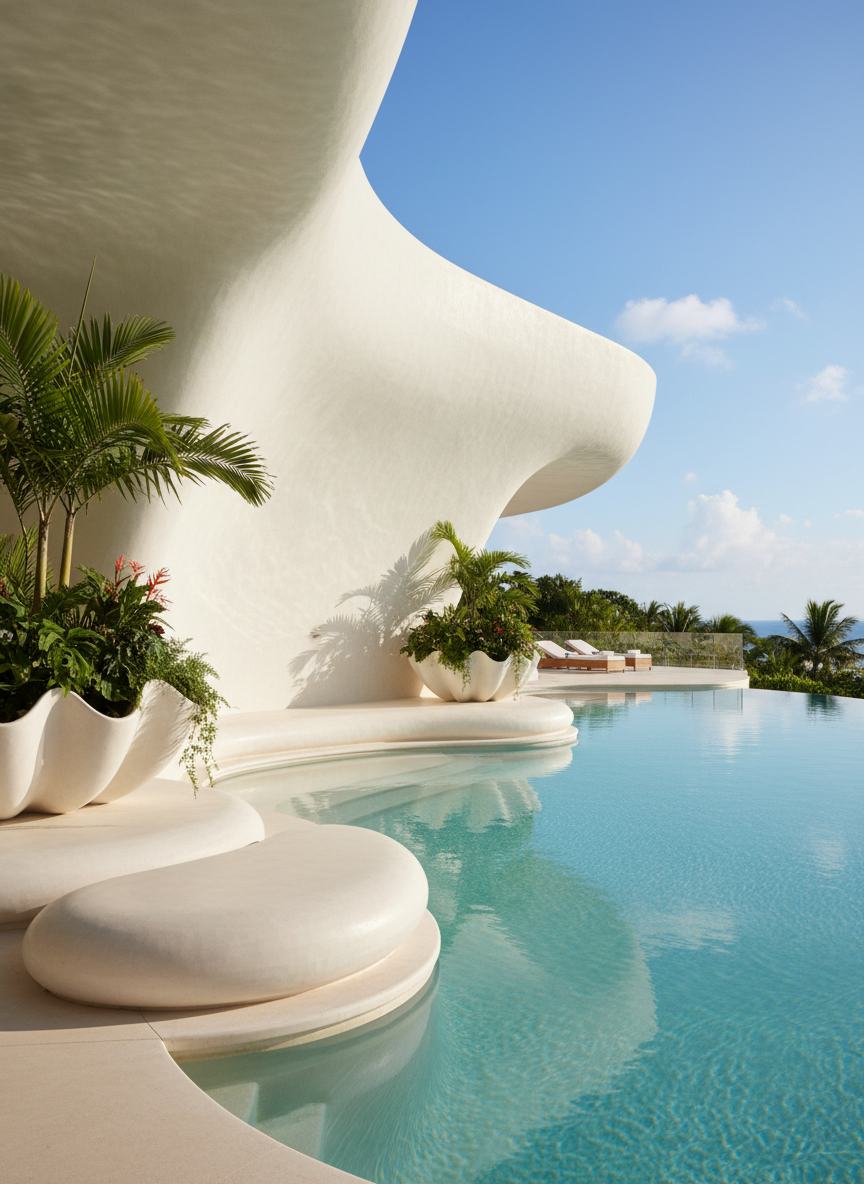
- GRP pots, feature elements, and custom components for landscape and hospitality.
- Hybrid GRP items combined with wood, metal, and glass in one assembly (e.g. Marriott DQ wood + GRP columns, Sofitel GRP pots).
Key Applications
Hotel and resort entrances (GRP domes, canopies, pots, and feature screens).
Pool decks and spa areas where corrosion and moisture are constant.
Landscape zones—benches, pots, planters, sculptural pieces.
Façade features that need big visual impact but must stay light and easy to fix.
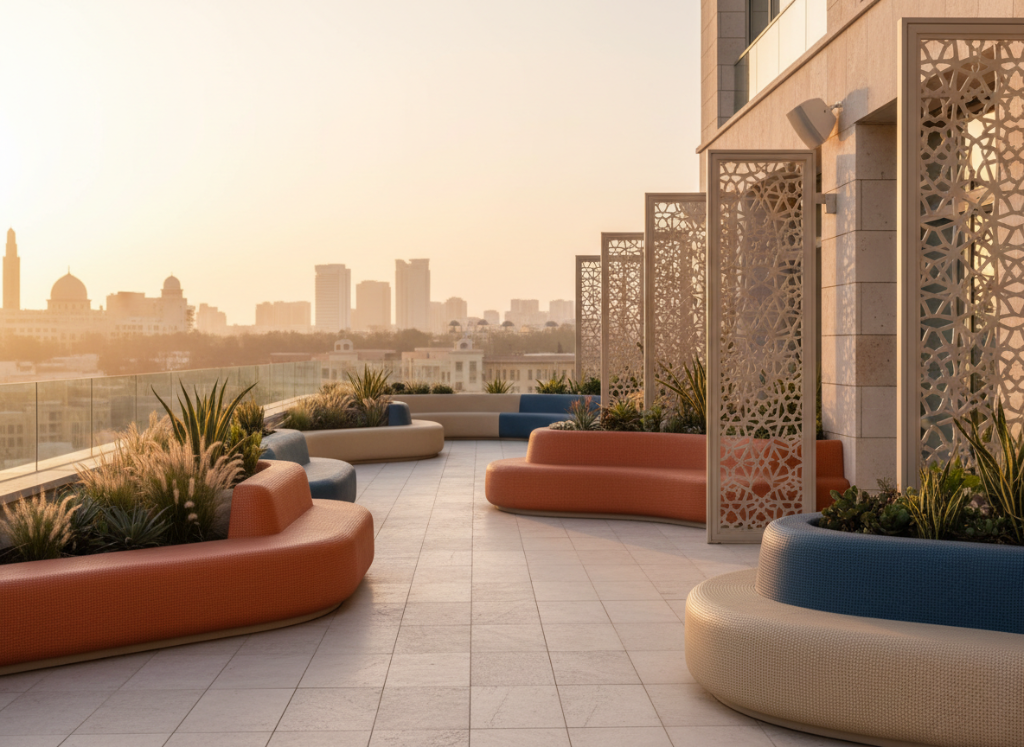
How Sana Al Jazira Delivers GRP Cladding & Components
1
Concept &
Material Fit
We start with your façade or landscape concept and honestly test where GRP makes sense against GRC, metal, or wood. The goal is not to sell GRP everywhere, but to pick it where weight, corrosion resistance, or form justify it.
2
Detailed &
Detailing
We develop 3D models of each GRP element, including thickness, stiffening ribs, joint lines, and interfaces with steel, concrete, or aluminium frames. Fixing details are resolved so GRP isn’t hanging from ad-hoc brackets invented on site.
3
Moulds & Lamination Strategy
Depending on repetition and complexity, moulds are built from CNC-milled tooling, GRP, or other suitable materials. We define laminate build-up, fibre orientation, and local reinforcement in anchor zones so panels behave as expected.
4
Manufacture &
Quality Control
GRP parts are fabricated with controlled resin–fibre ratios, curing, trimming, and edge finishing. Visual quality (texture, gloss, colour) and dimensional checks are done before anything leaves the workshop.
5
Installation
& Support
Because SAJ also handles wood, metal, glass, and fit-out works, we coordinate all GRP interfaces and support the contractor with fixing sequences—especially where GRP meets aluminium, GRC, or glazing
Designing GRP for Harsh Environments
Unlike cement-based systems, GRP is a polymer composite—which means it behaves differently under UV, heat, and moisture. The resin matrix, fibre type, and finish all matter.
Key design points:
- UV resistance: External GRP needs UV-stable gelcoats or topcoats; otherwise, colour fading and surface chalking appear over time.
- Thermal movement: GRP expands and contracts more than concrete or steel. Joints, fixings, and interfaces must allow for differential movement so you don’t crack sealants or tear fixings out over time.
- Drainage & detailing: Domes, canopies, and pergolas need clear water paths. Standing water will accelerate ageing and stain finishes, even on corrosion-resistant GRP.
- Access & replacement: Where GRP is exposed to impact or high traffic, we design elements so small units can be removed and replaced instead of needing major demolition.
For Saudi projects, this means sizing joints with realistic temperature ranges, defining movement details at edges, and choosing finishes that actually survive strong sun, dust, and occasional heavy rain instead of just looking good in renderings.
Interfaces: GRP with Wood, Metal, and Glass
One of SAJ’s real advantages is that GRP is not handled in isolation—it’s part of a broader décor, metal works, and fit-out scope. 
Typical interface strategies:
GRP + Wood:
Use concealed steel/aluminium subframes so wood never carries GRP loads directly. GRP elements can form bases, capitals, or decorative jackets around timber structure.
GRP + Metal:
Metal takes primary structural loads; GRP provides form and finish. Fixings are detailed so dissimilar materials don’t fight each other—slots, shims, and isolation pads handle movement and avoid galvanic issues.
GRP + Glass:
GRP is often used as a cladding or cover around glass framing and handrails, especially in hotels and pools. Here, stiffness and deflection limits on the metal/glass system dictate what GRP can do on top.
On projects like Sofitel Riyadh and Marriott DQ, this integration is visible: GRP pots and columns sit in a consistent language with wood cladding, metal works, and high-end interior joinery, because one contractor has coordinated the whole package rather than several competing subcontractors.
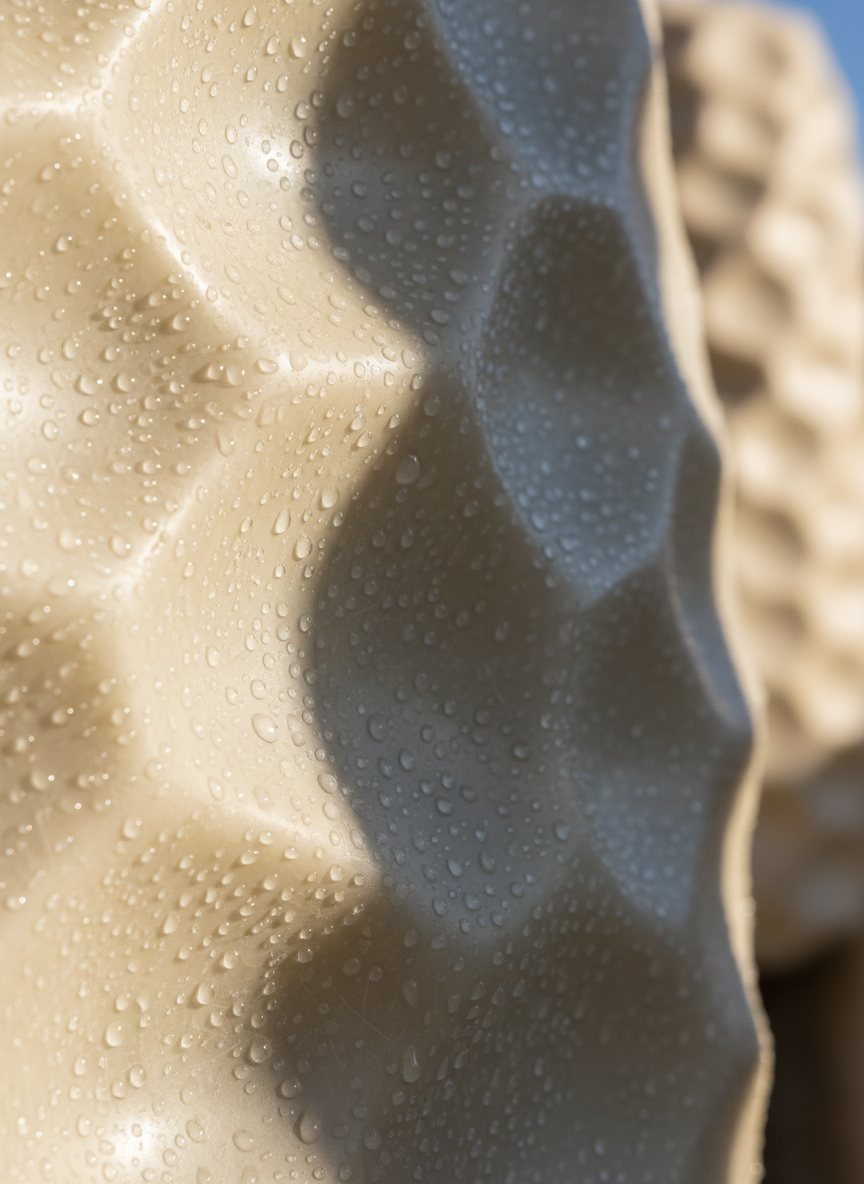
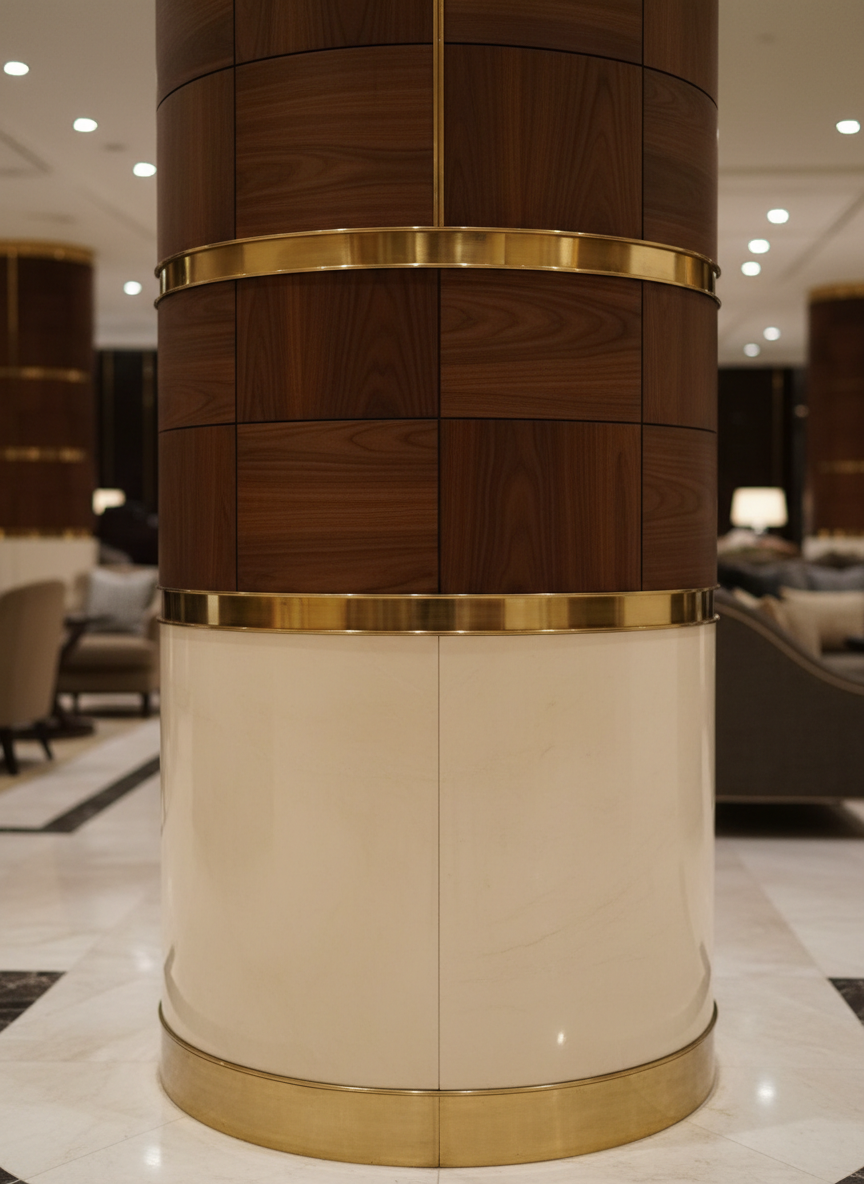
GRP Cladding & Components – FAQs
Use GRP when you need low weight, complex free-form shapes, high corrosion resistance, or bright, controlled colours and finishes. Roof domes, canopies, pergolas, pots, and small feature elements are typical GRP zones.
GRP is significantly lighter than GRC and dramatically lighter than concrete or stone. Exact weight depends on laminate thickness and ribs, but it’s usually light enough to sit on lighter secondary steel or even existing structures with minimal strengthening.
Yes—provided the correct resin, gelcoat, and detailing are used. GRP’s corrosion resistance makes it suitable for pools, spas, and coastal hotels; we adapt the specification for these conditions.
Service life depends on exposure, specification, and maintenance. UV-stable coatings and proper detailing can give many years of acceptable performance. When finishes age, they can often be cleaned and recoated rather than replaced.
Yes. GRP can be matched to a wide range of colours and textures—from stone-like effects to solid RAL or brand colours. On mixed-material façades, we coordinate finishes across GRP, GRC, metal, and paint so they read as one family.
Typically via stainless steel or galvanized steel frames, studs, or brackets embedded or bolted to the GRP shell. We design these connections based on load, access, and movement so they remain accessible and replaceable if needed.
Minor damage can often be repaired in situ with compatible resin and gelcoat; more extensive damage may require replacing a module. We design modules and joints so isolated replacement is possible without major demolition.
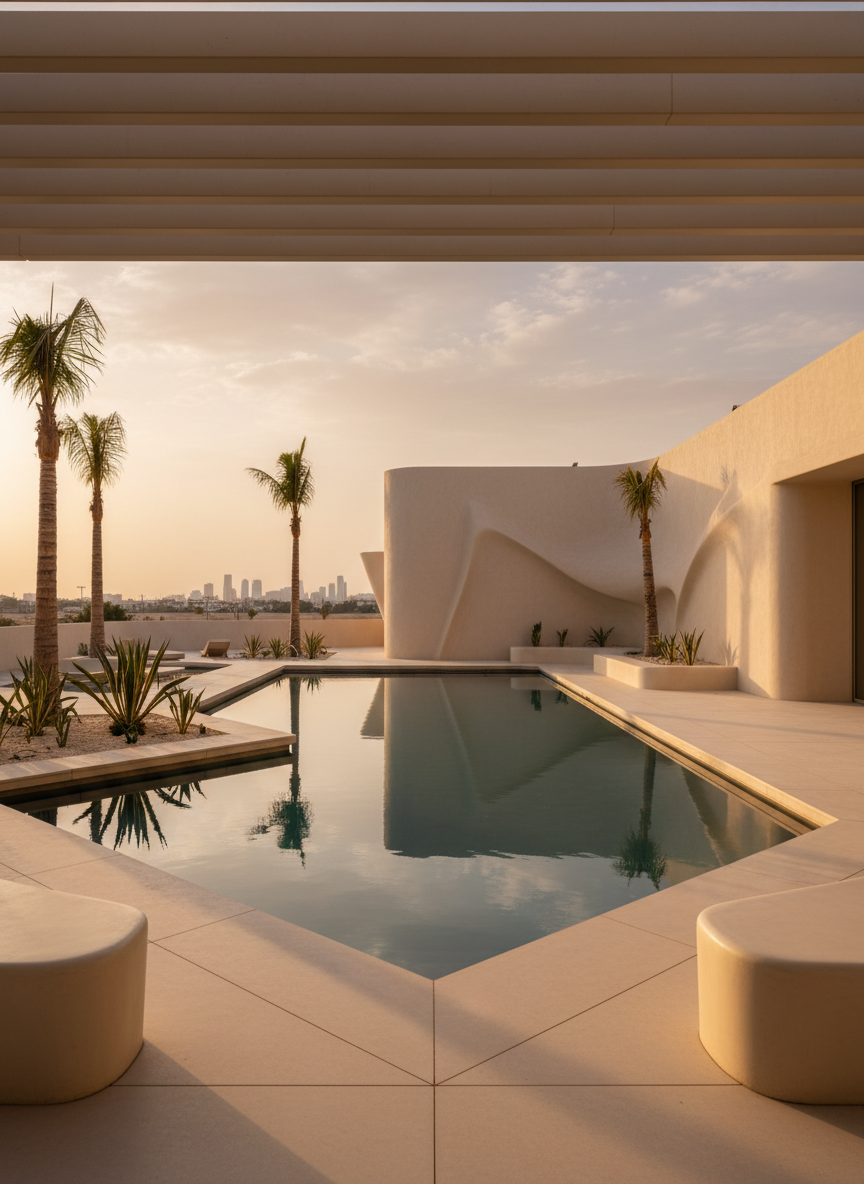
Planning Domes, Pergolas or Feature Elements in GRP?
Share your elevations, landscape layouts, or roof plans. We’ll help you decide where GRP is the right material, and how to tie it into the rest of your façade, metal works, and fit-out scope so the whole project feels coherent.